Vucciria at Night: How a Palermo Food Market Turned Into a Street Party
In Sicilian, vucciria means a racket, a confusion of voices. For centuries that racket was a market. Butchers, then fishmongers and greengrocers, shouting over each other in the lanes between Via Roma and La Cala. Renato Guttuso painted it in 1974 as a wall of swordfish, meat and fruit.
Go now, in the evening, and the racket is still there. It just comes from a guitar.
A band, a bar and a man with his arms up
Under a green awning at a bar table, a band is playing: a guitarist at the microphone, a drummer behind a kit, a keyboard player at the back. In front of them a young man in a grey sweater has his back to the camera and both arms stretched up toward the musicians. Around him the tables are full. A woman in sunglasses sings along. Others have their hands in the air too, or a phone up, or both.
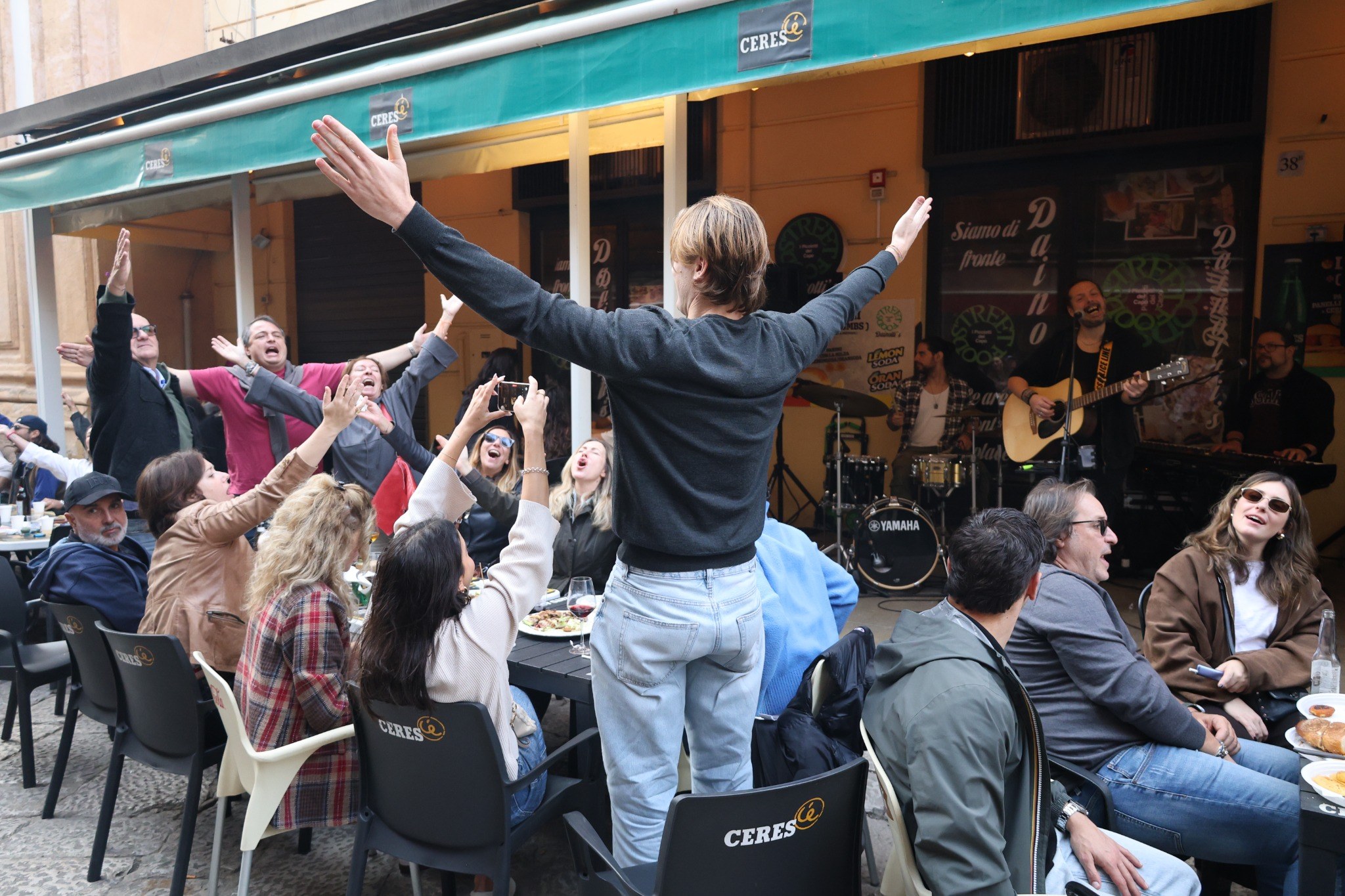
On the tables there are plates of food, glasses of wine, a bread basket. Plastic chairs, a stone pavement. That's the Vucciria today: dinner and a show, both cheap, both loud.
From meat market to movida
The market's heart is Piazza Caracciolo, which in the Angevin period held the city's biggest slaughterhouse. The name probably comes from the French boucherie, butcher's shop. Over time it became a general market for meat, fish and produce, spreading into Piazza Garraffello, Via Argenteria and the steps down from Via Roma.
Over the last few decades the stalls thinned out, and the night filled the gap. Bars set up plastic tables in the square. Grills started up after dark. Students, then tourists, came for cheap drinks, stigghiola and music.
That shift isn't universally loved. In July 2026 Gambero Rosso ran a piece arguing that tourism had eaten the market's soul, with the traders and stalls disappearing in favour of bars, tables and souvenirs, and only a few old food businesses holding on. Lonely Planet's guide has long called today's market a pale shadow of the one in Guttuso's painting.
Both things are true. Nobody does their weekly shopping here anymore. And it's still one of the liveliest evenings in Palermo.
What to eat there at night
- Stigghiola from the grills: lamb or veal intestine wrapped around spring onion, charred, chopped and lemoned.
- Polpo bollito: boiled octopus, sliced to order.
- Sarde and fried fish from the trattorias that survived the change.
- Pane e panelle or an arancina if you want something to soak up the beer.
Prices are low by city standards, but tables at the busier bars charge more than the stand-up counters. Check what a beer costs before you sit.
When to go
After 21:00, especially Friday and Saturday. Before that it can be oddly quiet, a few tables and a lot of photographs. By midnight the square is full.
It gets crowded, it gets loud, and the music changes from table to table, live band at one bar, reggaeton at the next. Keep an eye on bags. Go with an appetite.
If you want the working market, go to Ballarò or Capo in the morning. For all three historic markets on one walk, see Travel Marketing.