Capo Market in Palermo: Beef Tongue Toasts, Butchers and the Way In Through Porta Carini
Capo is the Palermo market people mention second, after Ballarò, and the one plenty of locals actually prefer. It's a bit calmer. The lanes are narrower. And the food counters inside it do a quieter, more careful version of Palermo street food.
You come in through Porta Carini, a fourteenth-century city gate, and walk downhill along Via Porta Carini into the little Piazza Capo. From there the market splits along Via Cappuccinelle and Via Beati Paoli, and it keeps going through Via Sant'Agostino and the alleys around them. The quarter's old name, Seralcadio, goes back to Arab Palermo. The layout still feels like a souk: one main spine, a tangle of side streets, and stalls pushing into every gap.
A platter of tongue and peppers
At one of the Capo counters, a blue-and-white platter held a crowd of small toasts. Each slice of sesame-crusted bread carried a thin, wide slice of beef tongue, and on top, strips of roasted pepper, red on some, yellow on others, sometimes both.
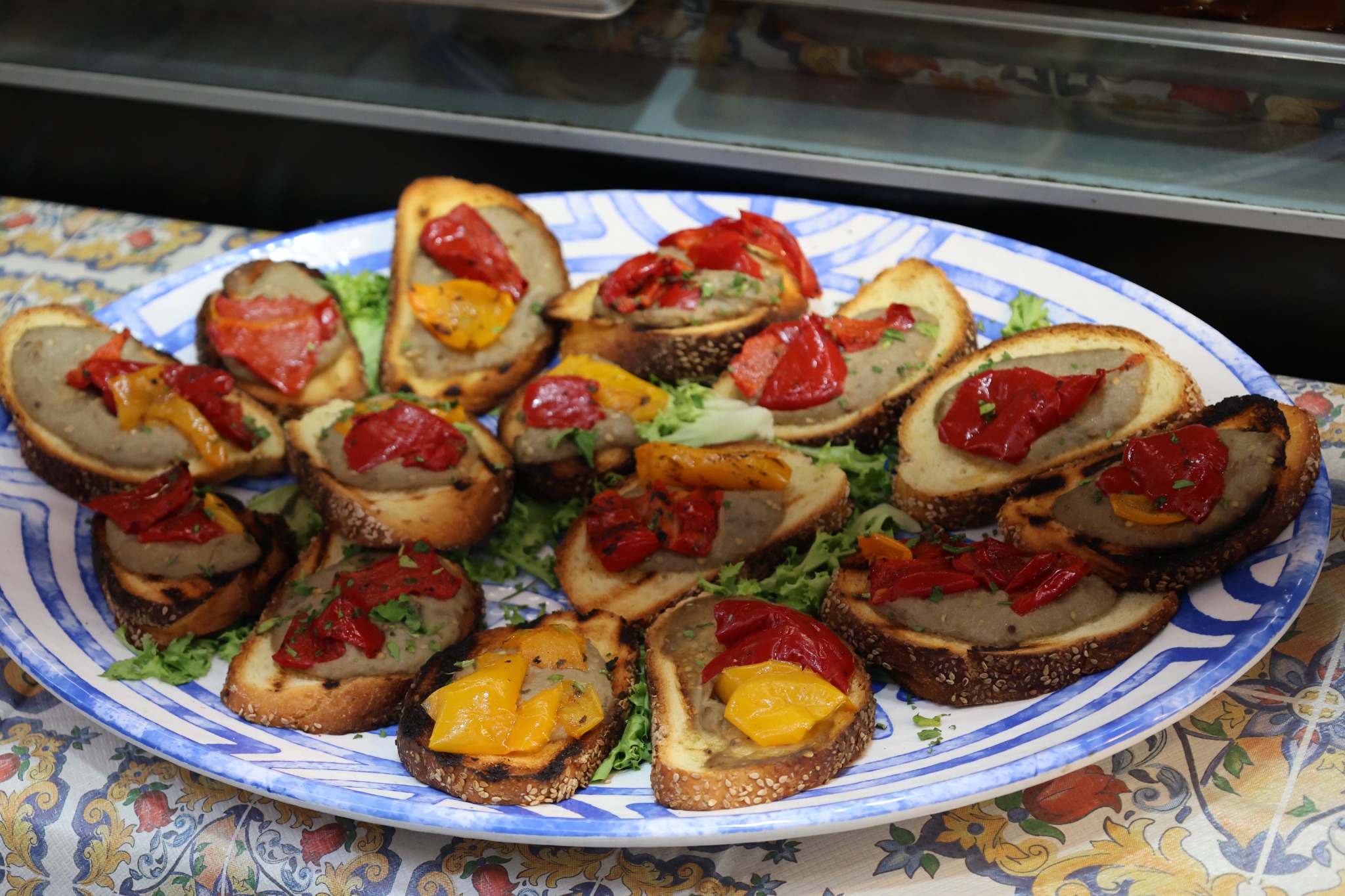
Lettuce is tucked between the toasts. The platter sits on a flowered counter cover, behind a glass case. It's built to be eaten in two bites with one hand, which is exactly how you'd want it at a market.
Tongue is one of those cuts that sounds like a dare and eats like very tender beef. Simmered slowly, then sliced across the grain, it's soft and mild. The peppers bring sweetness and juice, and the toasted bread soaks up a bit of both.
This is the kind of thing Capo does well: Palermo's habit of using the whole animal, served in a way that doesn't need explaining.
What else to eat at Capo
Fried things. Capo has a reputation for its friggitorie. Arancine, panelle, crocchè and sfincione are all here, often hotter and less crowded than in the better-known spots.
Fish. Some Palermitans call Capo the fish market above all the others. The counters are smaller than Ballarò's but the fish comes in that morning.
Meat. Look for the carnezzerie, a dialect word from the Spanish period for butchers' shops. Several still have their own grills or cook to order.
Snacks for the walk. Dried fruit, nuts and spices are sold by weight and make easy souvenirs.
Street food here costs about the same as elsewhere in the old town, roughly €2 to €3 a piece as of late 2026. Plated things like the tongue toasts are priced by the counter. Ask first.
When to go
Capo is a morning-into-afternoon market, Monday to Saturday. Listings disagree about Sunday: some show it closed, others say it runs until lunchtime. Wednesday afternoons can also be quiet. Go on a weekday morning and you'll see it working properly, with people buying vegetables they actually have to carry home.
From Capo it's a short walk to the cathedral and to Via Maqueda, so it fits easily into a morning in the old town. Pair it with Ballarò on another day; doing both back to back is a lot of frying.
At home: poach a beef tongue gently for two to three hours with an onion, a carrot and bay, peel it while warm, chill it, and slice thin. Put it on toasted bread with roasted peppers left in wide strips so each bite gets some.
The tongue toasts get a closer look, and a recipe idea, on Peppers. For Capo alongside Ballarò and the Vucciria, see Travel Marketing's market walk.